Showing posts with label Proofreading Practise. Show all posts

Monday, November 16, 2009

Erin McKean Redefines the Dictionary - Live Blogging as Proofreading Practise: Shawna Blumenschein

Dictionaries are compiled by people, they are made of discrete bits; lexicographical is the word for compiling dictionaries

People often think the dictionary/lexicographers are more like cops, than warm snugly things; deciding what words are good or bad is not easy or fun.

The fisherman is metaphor for work of lexicographers - it's like casting a net and seeing what marvelous words can be found.

Why do people want lexicographers to be more like traffic cops and direct language? Because dictionary has not changed for a long time and isn't really the best format.

What about computers? They don't do much other than speed up process of compiling dictionaries, the end result remains the same. The dictionary is Victorian design with modern propulsion. What about online dictionaries? They must be different. Rather, they replicate almost all problems of print except search-ability... which takes away one advantage of print: serendipity, finding things you aren't looking for because what you are looking for is difficult to find.

When people find a word that's not in the dictionary, they think it must be a bad word rather than it's a bad dictionary. Therefore, paper is the enemy of words. The book is not the best shape for the dictionary. Artifical restraint leads to a constrained world view. We should study all words rather than just the ones that make it into dictionaries.

Lexicography is more about material science, examining the tolerance of materials that are used to build the structure of expression. How do I know this word is real? If words are a tool, how can you say one tool (word) is better than another? It's just the right tool (word) for the job. If you love a word, use it, and that makes it real. Being in the dictionary is an artifical distinction that doesn't validate a word in any way. If people worry less about control and more about description, then the English language becomes a beautiful mobile and any time you use a word in a new context or verb it you- make mobile move; English is pushed into a new position or direction and it's beautiful.

There are 17 million books in Library of Congress, half in English, if only half of those had one word not in dictionary, it'd be two abridged dictionaries. That doesn't even account for new words on the internet, blogs, or the tendency for a word to take more than one meaning for itself. Therefore, shouldn't we all be able to find new words?

We could make the dictionary the whole language, rather than use it as a symbol of the whole English language, but we need a format that works better than the constraining paper book.

Erin McKean Redefines The Dictionary - Live Blogging as Proofreading Practise: Billie Fleming


Most if not all of this is enumerated from Erin McKean's speech.
Lexicography double dactyl what words are good and what words are bad a The queen has made it so that the oxford dictionary has not changed Computers speed up the process don't change the result. The design has not changed. Computer dictionaries replicate all the problems of print serendipity search-ability. Finding a word that is not a in a dictionary is that it it is bad. Paper is the enemy of words. Material science tolerances speeches writing. The dictionary is artificial and we need to transcend paper. So many words so little people to find them. Lexicography is not rocket science. Words and enthusiasm is what makes up lexicography. You need a source for every word. If we leave our old views about how we receive, find and use words, there will be no need for the Victorian Dictionary
anymore.
Read more about Erin McKean here in her Bio.

Erin McKean Redefines the Dictionary- Live Blogging as Proofreading Practise: Murriel Mapa

A Lexicographer is someone who writes and studies the dictionary, while lexicography is a compilation of words in the dictionary. Lexicographical has a double dactile same as higgly-piggly." A lexicographer doesn't decide what words are good or bad. The definition of a dictionary hasn't changed since the F-word was put into it in 1965. The maker of the Oxford dictionary is who controls what is we perceive today as good or bad in the English language. Computers don't do much else than just speed up the process of looking up a word, the design of the dictionary has not changed. Online dictionaries replicate all problems of printed ones, but search-ability increases serendipity. Erin McKean brings up the "ham-butt problem" that is described as throwing away a perfectly good piece of meat for no reason, which is comparable to the way in which people treat words. People sometimes perceive a word as a "bad" word if it is not found in the dictionary, but this is not the case. The dictionary just isn't big enough to hold every word in the English language and needs a bigger pan per se. "Paper is the enemy of words," meaning that the typical dictionaries are just not as used as online dictionaries. The only way to make a word a real word is to love the word. If there is a word you love to use, use it because a dictionary is just an artificial distinction. This is what makes words real and come to life. McKean compares lexicography with directing traffic and sometimes a person needs help doing this. If there were more than one person controlling traffic, it would be difficult and confusing at first, but a lot more would get done. This is the same with the dictionary; if there were more people contributing to enlarge the dictionary, people wouldn't believe that words are good or bad. She also compares the English language to a map, where the lighter spots were symbolized as the words we knew, and the darker areas are the newer words we haven't discovered yet.

Erin McKean Redefines the Dictionary - Live Blogging as Proofreading Practise: Cassidy Munro

Lexicography - the act of compiling dictionaries.
Erin McKean is a lexicographer. She gets to say fun words, but most people don't have a fun feeling for dictionaries. Deciding what words are good or bad is not fun, or easy. Because of this she doesn't want to do them. She'd rather be a "fisherman", as in she'd like to throw her line into the English Language and catch some big ones, or new words. Unfortunately, she has to be a police officer, or traffic cop, for words and doesn't have time to go fishing for new words.

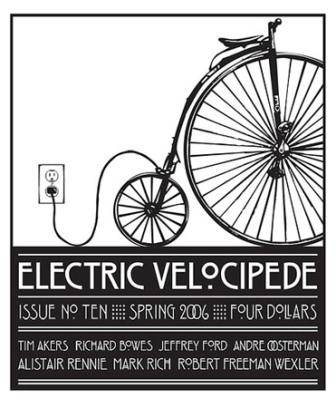
Dictionaries haven't changed since conception. Yes, now we have computers, but computers just speed up the process of compiling dictionaries they don't change it. McKean refers to dictionaries as steam punk in the way design hasn't changed, an electric velocipede. Even online dictionaries aren't that different from print dictionaries, they still simply list words. All that's changed is the search process, and how we find other words in the dictionary.

Essentially McKean says dictionaries are a "ham-butt problem", what she means by this is it's not that there's good and bad words, there's just not enough room for all of them. When people find a word not in the dictionary they think it's a bad word, but really the dictionaries that are bad.
McKean says paper are the enemies of words. Not that paper dictionaries are going to disappear, but it won't be the dominant form of dictionary.
What if scientists could only study cute animals? Well, we wouldn't know much of anything. Same thing with words, if we only study the so-called "good" words then we're missing out.

McKean says: "Words are the tools that we use for the expression of our thoughts."

There is not question of what is a word and what isn't. Love makes words real, being in the dictionary is an artificial distinction. Think of the English language as a mobile, if you touch it or change it it's not broken, it's just in a different position. It's still pretty and nice.

If your goal is not to direct words, but to count them then you need more people to help complete the task. There are un-dictionary words in almost all books, newspapers, and magazines, but they're still words. Some words even have more meanings that aren't in dictionaries. "Set" can have 33 different meanings. One is miscellaneous technical senses. What McKean is telling the listener is that lexicography is not rocket science, anyone can help compile words. Even if it were, rocket science is being done by dedicated amateurs, so you don't need to be a lexicographer to help find words that aren't in dictionaries.

The Internet is great for collecting words and is essentially made up of "words and enthusiasm." So is lexicography but, unfortunately, words online often don't have context.

We could make the dictionary be the whole language. If we can put in all th words we can leave the aesthetic decisions to the writers and the speakers. Lexicographers can go looking for words, not policing them.

Erin McKean Redefines the Dictionary- Live blogging as Proofreading Practise: Jenny Nielsen


Lexicography: The practise of compiling dictionaries. People are confused about what they do. It is not easy or fun to be a traffic cop in this context. You have to keep in the good words, and leave out the bad words. A better metaphor would be "a fisherman" as opposed to a traffic cop. To throw in your net and haul up whatever treasures there are; she blames the queen.

What about computers and online dictionaries? Paper thrown up on the screen is flat. There is not a lot going on in online dictionaries. They replicate the problems of print. It may be helpful to remember the "Ham but" problem story (why do we throw away the but of the ham?) Our Mother threw it away, and our grandmother threw it away but why? It was because the pan was too small. Don't blame the dictionary for not including a word, and don't blame the ham for the problem of the pan. Paper is the enemy of words. The book is not the best shape for the dictionary. We still need paper dictionaries, just not a majority of paper dictionaries. We do not know a lot about some of the less common, or exciting words. We need to use more words to build our expression. Words are the tools that we use to build the expressions of our thoughts. How do we know that our words are real? Love makes words real. Being in the dictionary is an artificial description. We should worry less about control and more about love and useage. Make the mobile move by using it. Use words.
There can only be so many traffic cops, but use them for other jobs. There are undictionary words in all books. "Set" has 33 definitions. Think of the dictionary as a map of the English language: we don't know very much. We are missing huge land masses, and we don't notice. It is not rocket science. Find words!! All you need is a telescope. The internet is made up of words and enthusiasm. remember to show the context. You need the source of the word or it us like a cut flower and will die. The dictionary is a part of the language. We could make the dictionary a bigger language just use a different pan. We need to put in all the words and leave the aesthetic judgement to the writers and the speakers.
Check out a list of new words!

Erin McKean Redefines the Dictionary - Live Blogging as Proofreading Practise: Shayna Fehr

Lexicography, I've never heard of it. McKean said it's "material science". She also said bits create words. Deciding which words are bad and easy is not fun. Both good and bad words are still words; therefore, they should have a place in the dictionary. Did you know that dictionaries have not changed since Queen Victoria, and that the F word was allowed into the dictionary in 1965?

Computers don't do much else but speed up the process of making a dictionary. The design of this book has never changed. Online dictionaries are only paper thrown unto the screen. They don't include any new words, that the written dictionary don't have. The only thing the internet has done to improve the dictionary is searchablility. Words that aren't in the dictionary are not bad, the dictionary is just too small to hold them. How do you know if a word is real? Erin thinks that, "They are the tools we use to build the expressions of our thoughts... If you love a word, it becomes real." Love makes things real, if you love a word you should use it. The dictionary is only part of the language. It is possible to make it the whole language - when there is enough people adding to it, and not taking out the "bad" words.

Erin McKean Redefines the Dictionary - Live Blogging as Proofreading Practise: Andrew Heck


Lexicography is the study of dictionary, which makes it fun to say complex words, but makes you seem like a nerd to people who are generally indifferent to the aesthetics of language. People are afraid of the dictionary, because they feel that it's too imposing, like a traffic cop. It feels like a rigid enforcement of words, and ultimately ideas. People aren't attracted to using words that seem unfamiliar to them in common speech. McKean makes an analogy of a lexicographer to a fisherman: the lexicographer explores words by "catching" them in an open space where so much that is unknown exists.
Our dictionaries have evolved to include colloquial words over time, which has contributed to the evolution of the language as a whole; however, there is no way to get around the fact that dictionaries are still boring to most people. Modern technology has made dictionaries impersonal. Online dictionaries improve searchability, but decrease some traditional functions of paper dictionaries. Dictionaries are limited and unintentionally exclude some words. McKean asserts, "the book is not the best shape for the dictionary." Dominant media for dictionaries changes over time, which can change certain aspects of their use. We should not ignore obscure words because they are simply unpopular.
Words are the tools for our thoughts. We should worry less about control of the language and more about description, which is the utmost goal. There should not be a fear to use new words to express an idea, simply because it isn't dictated by the database of common words. Looking closer at the usage of words that aren't in the dictionary, we find that there is an incredible number of words being used that are not "proper." By adhering to a system of words, we lose our ability to describe certain things. We tend to use the dictionary to represent the entire language, which does not suffice. Using words is very subjective and should be judged by the writer or orator, not a book. By scaring ourselves into following the basic trends of language, we are discouraged from truly getting our message across, which deflates all creation.


erin McKean Redefines the Dictionary - Live Blogging as Proofreading Practise: Caleb Caswell


Quite an amusing speaker.She says people don't enjoy dictionaries, that they seem old world. Lexicographers keep words out of the dictionary but should instead look for new interesting words, and she describes finding new words as fishing for great catches. The English used to keep the same words (dictionary) back in the reign of the queen. Language is changing, computers don't help to change language, it keeps the language the same. Online dictionaries have the same problems as print except for searchability, the serendipity problem is also destroyed in finding things you weren't looking for. The ham-butt problem is that we've kept problems out because we think they're useless, but it's not the ham butt that is the problem, we've kept too small a pan to cook it in. Looking to change dictionaries to virtual instead of paper. Should we not study the whole of language instead of just using only accepted words? Words are the tools that we use to build the expressions of our thoughts. being in the dictionary does not validate the usage of words. being a traffic cop for grammar makes it so that several people can gave different rules. Several different uses for words are in books and are not in the dictionary but are used anyway, Many new words are created by papers and novels by the day. we don't know enough about our language and are excluding many words, the internet is made up of words and enthusiasm, it is a great place to collect words. sites don't have enough information about specific words. need to know the source of the word, who said it, what it is used in context in. if the search is wide enough we could collect more words and create a dictionary that involves the whole of language.

the speakers site is here.

Erin McKean Redefines the Dictionary-Live Blogging as Proofreading Practise:Kayla Gaffney


The practice of complying dictionaries is lexicography. The perks of being a lexicographer is that you get to say fun words. The non-perks of being a lexicographer is that, in general, people don't like the dictionary. They think that only good words are supposed to be in the dictionary; however, Erin McKean does not want to restrict words. She doesn't want to exclude certain words. She blames the Queen for likening a lexicographer to a traffic cop- it is funny because English has not changed since her reign. Dictionaries are old-fashioned. Online dictionaries only improves the speed of a search. "Online dictionaries are paper thrown up on the screen."
It is not that their are good words or bad words, it's that something has been handed down for us to try and place words into categories. Words that are not in a dictionary are not bad words. Chances are that the dictionary is bad. "Paper is the enemy of words. The book is not the best shape for a dictionary." The English language is as big as it is, so it is hard to contain it in a small book. People should study all the words because people can make beautiful expressions from very small parts, so all words in the English language should be studied. "How do you know if a word is real? If you love a word, it becomes real." People should worry more about description than control over words.
"If you ask for help you get more done." In almost every book or newspaper, there is a word that is not in a dictionary. Lexicography is not rocket science. We don't know a lot of English and we don't even know that we are missing it. We should be able to find words. The internet is great for collecting words. "The internet is made up of words and enthusiasm." "A word is like an archeological artifact." "We can make the dictionary be the whole language." If we can put in all the words and not have a distinction between the "good" and "bad" words, the English language would be a better place.